
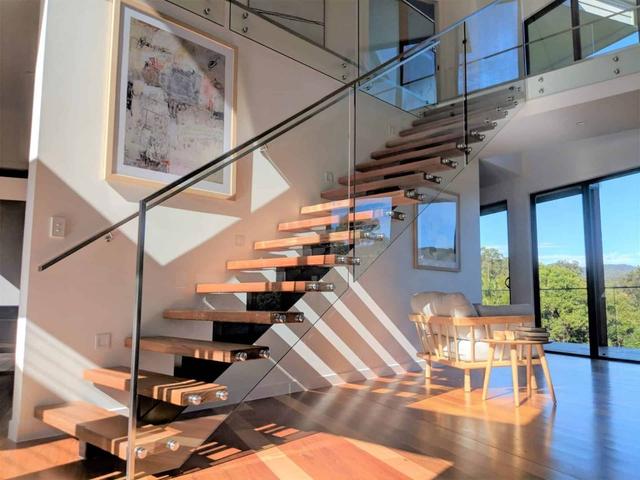
A glass balustrade is a safety barrier first and a design feature second. For a villa staircase, landing or balcony in Dubai, the key decisions are the type of safety glass, the way the glass is fixed to the structure, and whether a handrail is needed. Get those right and the balustrade stays safe and good-looking for years; get them wrong and it can be the weakest part of the home.
This guide explains the options in plain language so you can brief your designer and compare quotations for a glass balustrade in Dubai. It is not a substitute for the structural design your project needs; balustrade loads and heights are set by the applicable building regulations and confirmed by the project engineer.
Toughened or Laminated Glass?
Only safety glass should be used in a balustrade. The two types behave very differently when they break.
Toughened (tempered) glass
Toughened glass is heat-treated to be several times stronger than ordinary glass of the same thickness. If it does break, it shatters into small, blunt pieces, which reduces the risk of serious cuts. The drawback for a barrier is that the whole panel can fall out of its fixing once broken, leaving an open edge.
Laminated glass
Laminated glass is two or more panes bonded by a tough interlayer. If one pane breaks, the interlayer holds the fragments and the panel tends to stay in place. For balustrades, a laminated build-up made from toughened panes combines strength with this post-breakage behaviour.
Where a fall would be serious, such as a stair void, an upper landing or a balcony, laminated toughened glass is generally the safer choice. Ask your supplier which build-up they propose and why, and whether the edges will be polished and protected.
How the Glass Is Fixed
The fixing system shapes both the look and the structural performance. The three common approaches are compared below.
| Fixing | How it works | Look | Points to check |
|---|---|---|---|
| Base shoe (channel) | Glass is clamped in a continuous aluminium channel fixed to the floor slab or stair stringer | Cleanest frameless line; channel can be recessed into the floor | Slab edge strength, fixing centres, drainage on outdoor channels |
| Spigots | Individual stainless-steel or aluminium posts clamp each panel near the base | Frameless with small visible fittings; popular around pools and terraces | Fixing into a solid substrate, gaps between panels, corrosion resistance |
| Posts with clamps | Vertical posts at intervals, glass held by clamps between them | More traditional; posts visible | Post fixing, clamp quality, handrail connection |
Side-fixed versions of each exist, with fittings bolted to the face of the slab or stringer rather than on top. Side fixing keeps the stair tread or balcony floor clear and is often chosen for staircases. Fixing systems and glass build-ups vary by supplier, so ask to see the system details for your project.
Handrails
A frameless glass balustrade can be installed with or without a handrail, but on a staircase a handrail is about more than appearance: it is what people hold when they climb. Options include:
- Top-mounted handrail: a cap rail fixed along the top edge of the glass, which also ties the panels together.
- Side-mounted handrail: fixed to the face of the glass with discreet brackets, leaving the top edge clean.
- Wall handrail: on the opposite wall of a staircase, so the glass side can remain frameless.
Whether a handrail is required on the glass, and at what height, depends on the regulations that apply to your building. Confirm this with your consultant before choosing a frameless top edge.
Child Safety
Families with young children often choose glass because there are no horizontal rails to climb. A few extra points help:
- Keep gaps between panels, and between the glass and the floor or stair, small enough that a child cannot slip through.
- Avoid placing furniture or planters near a balustrade where they could be used as a step.
- Consider manifestation (frosted bands or dots) on glass in busy areas so it is visible.
- Choose laminated glass where a fall would be serious.
Balconies and Outdoor Areas
Outdoor balustrades face sun, sand, wind and occasional heavy rain. Points to discuss with your supplier:
- Wind load: upper-floor and rooftop balconies are more exposed, and the glass and fixings must be designed for it. Our guide to rooftop and terrace glass rooms covers exposure on upper levels.
- Corrosion: use fittings suitable for outdoor use, particularly near the coast or a pool.
- Drainage: base-shoe channels outdoors need a way for water to drain out.
- Cleaning: dust settles on horizontal fittings and glass; easy access for cleaning saves effort later.
Ask your supplier whether they install outdoor and pool-side balustrades and what glass and fittings they propose for those locations.
Design Choices
- Clear, low-iron or tinted glass: low-iron glass removes the slight green tint visible on thick panels.
- Frosted or patterned glass: adds privacy on balconies facing neighbours.
- Finishes: fittings can be matched to the stair, door and window finishes.
- Daylight: a glass balustrade lets light pass down the stair void, especially under a glass skylight.
- Matching openings: on balconies, pair the balustrade with slim sliding doors or frameless folding doors for a consistent look.
Questions to Ask Before You Order
- What glass build-up is proposed, and is it laminated?
- Which fixing system will be used, and what substrate will it fix into?
- Who carries out the structural check for loads and wind?
- Is a handrail required, and at what height?
- How will panel gaps and the bottom gap be controlled?
- What finish and grade are the fittings for outdoor use?
Frequently Asked Questions
Is toughened glass safe for a staircase balustrade?
Toughened glass is a safety glass, but if it breaks the panel can fall away. Laminated toughened glass holds together after breakage and is generally preferred where a fall would be serious.
Do glass balustrades need a handrail?
It depends on the design and the regulations that apply to your building. On staircases a handrail is often needed for safe use. Confirm the requirement with your consultant.
Which is better: base shoe or spigots?
A base shoe gives the cleanest continuous line; spigots are quicker to install on some substrates and suit outdoor areas. The structure and the look you want usually decide.
Are glass balustrades suitable for homes with children?
Yes, when the glass is laminated, gaps are kept small and nothing climbable is placed nearby.
How much does a glass balustrade cost in Dubai?
Cost depends on length, glass build-up, fixing system, handrail and site access. We confirm this on your quotation after measuring.
Plan Your Glass Balustrade
Four Season fabricates and installs aluminium and glass systems from our factory in Al Quoz, Dubai. Share your stair or balcony drawings, or book a site visit, and we will advise on glass and fixings for your space. See our staircase glass and glass railings, call or WhatsApp +971 52 953 5300, email info@fourseason.ae, or request a free quotation.