
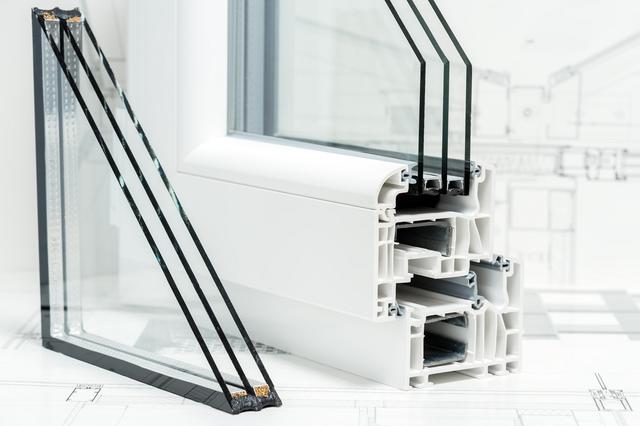
In the UAE, double glazing has one main job: keeping the sun's heat out so the air conditioning works less hard. The insulating cavity helps, but the coating on the glass does most of the work, so specifying double glazing here means choosing the right solar-control or low-E coating, the right tint and the right position for that coating, then checking the figures on the glass data sheet.
This guide explains those choices without jargon, so you can compare quotations for double glazed windows in the UAE on a like-for-like basis.
Where the Heat Comes From
Heat enters a room through glass in two main ways:
- Solar radiation: sunlight passing straight through the glass and warming whatever it lands on. On a sunny UAE facade this is usually the larger part.
- Conduction: heat moving through the glass from the hot outside air to the cooler inside air, even in shade.
A double-glazed unit (two panes separated by a sealed cavity) mainly reduces conduction. A coating on one of the panes is what controls solar radiation. That is why two double-glazed units can perform very differently.
The Numbers on a Glass Data Sheet
Glass manufacturers publish data sheets for each glass combination. You do not need to be an engineer to use them; these are the figures to look for.
| Figure | What it means | For UAE homes, generally look for |
|---|---|---|
| Light transmission (LT or VLT) | The share of visible daylight that passes through | Enough to keep rooms bright; balance against glare |
| Solar factor (g-value) or SHGC | The share of the sun's total energy that ends up inside | Lower is better for cooling |
| Shading coefficient (SC) | Solar gain compared with a reference clear glass | Lower is better for cooling |
| U-value | How easily heat is conducted through the glass | Lower is better |
| External reflectance | How mirror-like the glass looks from outside | Check against community or design guidelines |
A useful single comparison is the light-to-solar-gain ratio: light transmission divided by solar factor. A higher ratio means the glass lets in plenty of daylight while blocking more heat. Ask each supplier for the data sheet of the exact unit quoted, not a brochure description.
Coatings: Solar Control and Low-E
Solar-control coatings
Solar-control coatings reflect a large part of the sun's infrared energy while letting visible light through. They are the most important choice for sunny elevations in the UAE.
Low-E coatings
Low-emissivity (low-E) coatings reduce heat radiated through the glass, which mainly improves the U-value. Many modern coatings combine solar control and low-E properties in one layer, sometimes described as "selective" or "solar-control low-E" glass.
Coating position
Coatings are applied to a specific face of a specific pane. For a hot climate, the solar-control coating is normally on the inside face of the outer pane, facing the cavity, where it is protected and reflects heat before it reaches the inner pane. Ask your supplier which face the coating is on; the same coating in the wrong position performs differently.
Tints
Body-tinted glass (grey, bronze, green or blue) absorbs part of the solar energy. It reduces glare and changes the look of the building, but it also reduces daylight, and the absorbed heat warms the outer pane. Today, a neutral or lightly tinted glass with a good solar-control coating often gives a better balance than a dark tint on its own. Tint is still useful where privacy or glare control is the priority, and many communities have guidelines on facade colour and reflectivity.
Cavity, Spacers and Gas Fill
- Cavity width: the gap between panes affects insulation; the right width depends on the glass and the frame system.
- Spacer bar: the strip that separates the panes at the edge. "Warm-edge" spacers reduce heat transfer at the perimeter.
- Gas fill: some units are filled with argon instead of air, which improves the U-value. It mainly helps conduction, so in the UAE it is a secondary benefit compared with the coating.
- Edge seal: the quality of the seal determines how long the unit stays dry and clear inside. Ask about the sealing method and warranty terms on your quotation.
Safety and Acoustic Layers
One or both panes can be toughened or laminated. Laminated glass is often used for the inner pane on large doors, skylights and ground-floor openings for safety and security, and an acoustic interlayer helps near busy roads. For privacy on demand, a switchable smart glass layer can be built into some units.
Do Not Forget the Frame
A high-performance glass unit in an uninsulated aluminium frame still loses heat through the metal. A thermal break aluminium frame, good gaskets and careful installation complete the job. The window or door type matters too; see our ranges of aluminium windows and slim sliding doors.
Specifying by Elevation
- West and south-west: strong afternoon sun; prioritise a low solar factor.
- South: high sun; overhangs and shading help a lot alongside the glass.
- East: strong morning sun; glare control matters in bedrooms.
- North: less direct sun; you may choose higher light transmission.
- Roof glazing: receives sun almost all day; specify the best solar control available. See our glass skylights.
For glass rooms in particular, our article on keeping a glass room cool in UAE summer explains how glass, shading and air conditioning work together.
Frequently Asked Questions
Is double glazing worth it in the UAE?
For air-conditioned rooms with significant glass, double glazing with a good solar-control coating reduces heat gain and improves comfort near the glass. The coating choice matters as much as the second pane.
What is the difference between low-E and solar-control glass?
Solar-control glass mainly reflects the sun's heat; low-E glass mainly reduces radiated heat transfer. Many products combine both.
Does tinted glass keep a room cooler?
Tint reduces some solar gain and glare but also reduces daylight. A clear or lightly tinted solar-control glass is often a better balance.
Is argon gas necessary?
It improves insulation, but in the UAE the solar-control coating usually has a bigger effect. Treat argon as an extra, not a substitute.
How do I compare two quotations?
Ask for the data sheet for each exact unit and compare light transmission, solar factor or SHGC, and U-value side by side.
Specify Your Glass with Four Season
Four Season supplies and installs aluminium and glass systems from our factory in Al Quoz, Dubai. Tell us the room, the orientation and how you use the space, and we will propose a glass build-up and confirm its performance figures on your quotation. Explore our double glazed glass options, call or WhatsApp +971 52 953 5300, email info@fourseason.ae, or book a free site visit.