
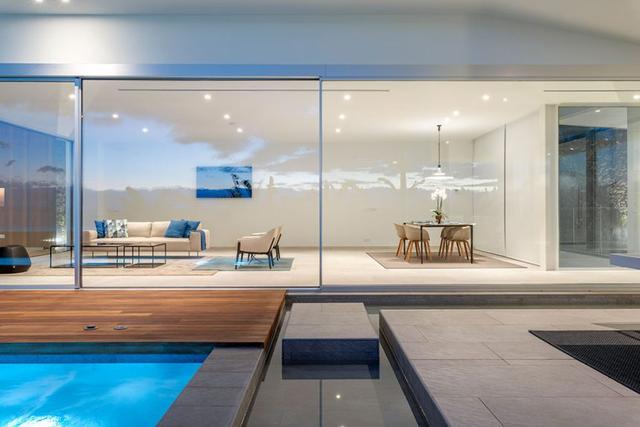
Slim, ultra-slim and ghost doors are all minimal-frame sliding systems; the difference is how much aluminium you can still see. A slim system has narrow but visible frames, an ultra-slim system reduces the meeting point between panels to a thin line, and a ghost (concealed-frame) door hides the outer frame in the floor, walls and ceiling so the glass appears to sit in the opening on its own. Each step towards less frame brings tighter installation tolerances and usually a higher cost.
This guide compares the three so you can decide which suits your villa, and what to ask when you compare quotations for slim sliding doors in Dubai. It is separate from our bifold vs sliding doors article, which deals with how the doors open rather than how much frame you see.
What "Slim" Actually Refers To
Every sliding door has three frame elements you might see:
- The outer frame: the fixed perimeter around the opening.
- The sashes: the frames around each moving glass panel.
- The interlock: the vertical meeting point where two panels overlap when closed.
Minimal systems reduce one or more of these. The interlock matters most, because it is the line that runs through the middle of your view. When suppliers quote a "slim" dimension, ask which element they are measuring and whether the figure is the visible face or the full profile depth.
The Three Levels of Minimal Frame
Slim sliding doors
Slim systems use narrower sashes and interlocks than standard sliding doors, with the outer frame still visible around the opening. They are a balanced choice: a cleaner look than a standard door, more flexibility in thresholds and glass, and fewer demands on the building works. They suit most villa living rooms, bedrooms and terraces.
Ultra-slim sliding doors
Ultra-slim systems push the interlock down to a very narrow line, often by using the glass itself as part of the structure, with the sash largely hidden. Large, heavy panels are typical. These systems need accurate openings, level floors and good structural support for the head, because the panels are heavy and the tolerances are small.
Ghost or concealed-frame doors
A ghost door goes a step further by recessing the outer frame into the floor, side walls and ceiling. From inside, you see glass meeting plaster, stone or tile with almost no visible aluminium. That effect depends on planning the recesses into the building before finishes go in. Our page on the aluminium ghost door shows the look in more detail.
Side-by-Side Comparison
| Point | Slim | Ultra-slim | Ghost / concealed frame |
|---|---|---|---|
| Visible outer frame | Yes, narrow | Yes, minimal | Hidden in floor, walls and ceiling |
| Interlock | Narrow | Very narrow | Very narrow |
| Panel size | Medium to large | Large | Large |
| Building works | Standard opening | Accurate opening, strong head support | Recesses planned before finishes; best at design stage |
| Retrofit to an existing villa | Usually straightforward | Possible with care | Difficult without opening up floors and ceilings |
| Relative cost | Lowest of the three | Higher | Highest, including builder's work |
Exact frame widths, maximum panel sizes and weights vary by system and glass, and we confirm them on your quotation and shop drawings.
Panel Sizes and Weight
Minimal systems invite large panels, because fewer panels means fewer interlocks. Large panels are heavy, especially with double-glazed or laminated glass. Before choosing the largest possible panel, check:
- That the floor and head structure can carry the weight and keep deflection within the system's tolerance.
- That the panel can physically be delivered and lifted into place; access through a villa gate, a lift or a stair core can limit size.
- Whether the panels will be manual or motorised, and how easy a heavy panel is to slide every day.
- How a damaged panel would be replaced later.
The Thermal Trade-Off
In the UAE, a sliding door is part of the building's cooling envelope. Less aluminium generally means less heat conducted through the frame, but sealing narrow interlocks is harder, and very large panels carry more glass that must be protected from the sun. Points to ask about:
- Thermal break: whether the frame includes an insulating barrier. See thermal break aluminium for how it works.
- Glass: the solar-control coating and whether the unit is double glazed. On a west- or south-facing elevation, the glass choice affects comfort more than the frame width.
- Seals and threshold: how air and dust are kept out, and how water drains from the bottom track, particularly with flush thresholds.
Price Drivers
We do not publish fixed prices, because two doors with the same opening size can differ widely in cost. The main drivers are:
- System level (slim, ultra-slim or concealed).
- Panel size and count.
- Glass build-up and coatings.
- Thermal break and finish, including dual-colour frames.
- Motorisation, locks and handles.
- Builder's work for recesses, flush thresholds and head support.
- Delivery and lifting equipment for heavy panels.
Which One Should You Choose?
- Choose slim if you want a cleaner look on a renovation or a mid-range budget, or if the opening is already built.
- Choose ultra-slim if the view is the main feature of the room and the structure can carry large panels.
- Choose a ghost door if you are designing or rebuilding and want the frame to disappear completely; involve the supplier before the floor and ceiling details are fixed.
The same thinking applies to windows; see our guide to slim sliding windows in Dubai. For a minimal swing entrance, a minimal pivot door follows the same design language.
Frequently Asked Questions
What is the difference between slim and ultra-slim sliding doors?
Both reduce visible aluminium, but ultra-slim systems narrow the interlock between panels much further and usually carry larger, heavier panels. They need more accurate openings and stronger head support.
What is a ghost door?
A ghost door is a sliding door whose outer frame is concealed in the floor, walls and ceiling, so only the glass and a thin interlock remain visible.
Can I fit a concealed-frame door in an existing villa?
It is possible but usually involves cutting into floors, walls and ceilings. A slim or ultra-slim system is often a more practical retrofit.
Are minimal sliding doors good in the UAE heat?
They can be, if the system has a thermal break, good seals and solar-control double glazing. Ask for the glass data sheet and the system's performance information.
How much do slim sliding doors cost?
It depends on system level, panel size, glass, finish and builder's work. We confirm this on your quotation after a site survey.
Get Advice on Minimal Sliding Doors
Four Season fabricates and installs aluminium and glass systems from our factory in Al Quoz, Dubai. Share your drawings or book a visit, and we will recommend the right level of minimal frame for your opening. Explore our slim and minimal sliding door range and wider sliding doors, call or WhatsApp +971 52 953 5300, email info@fourseason.ae, or request a free quote.